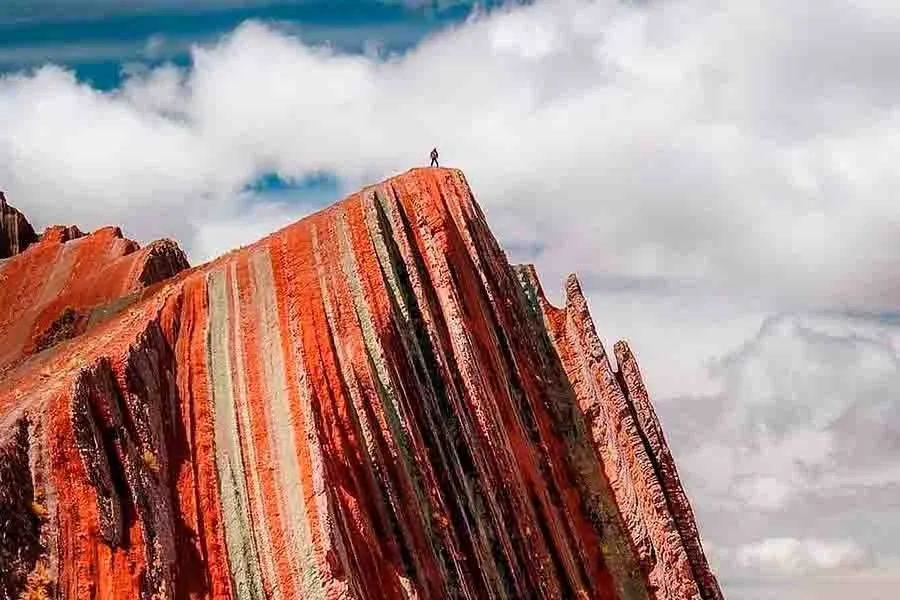
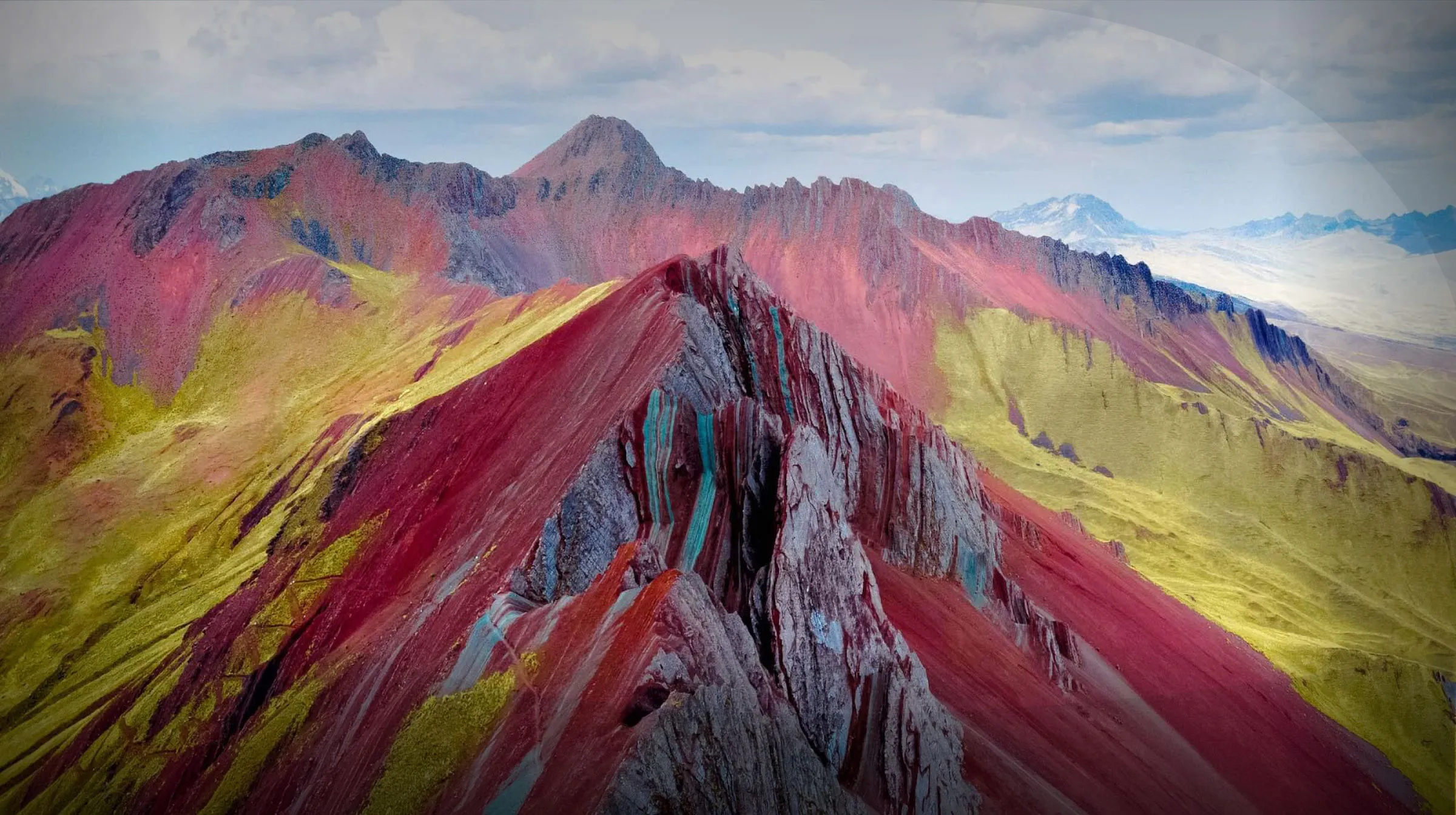

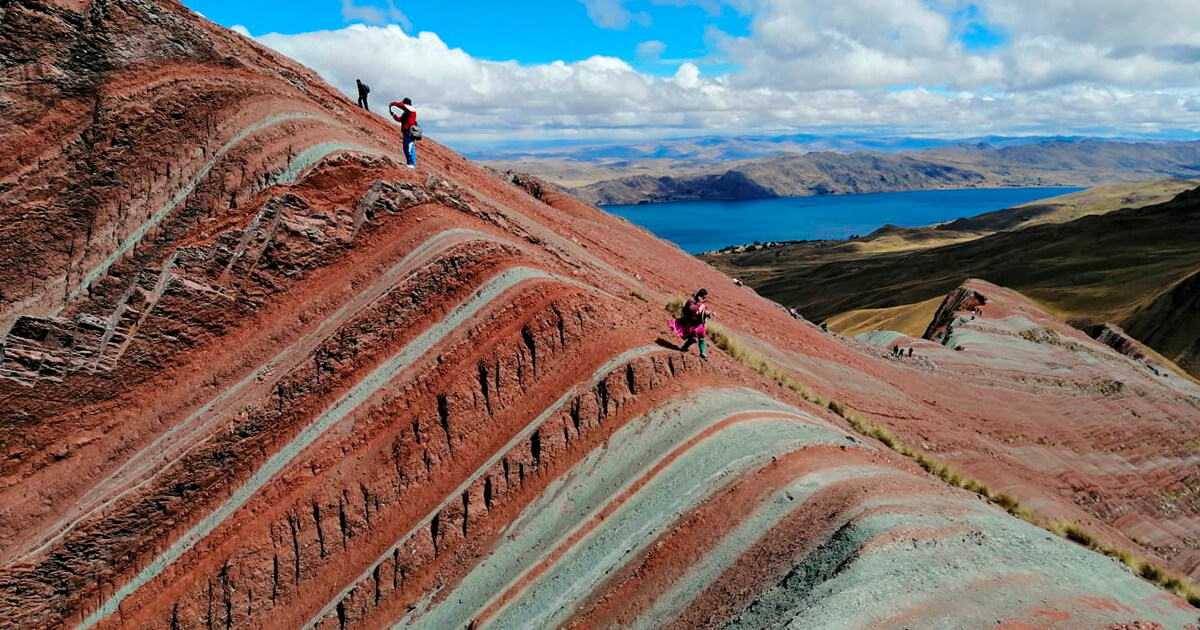





The Pallay Punchu Mountain Tour is a full-day experience that will take you to discover one of Cusco’s least explored natural wonders. Known as the “Andean Poncho,” this mountain stands out for its unique formations and colors that evoke the region’s traditional woven fabrics.
The adventure begins with hotel pickup and tourist transportation, followed by a moderate to challenging hike at more than 4,600 m.a.s.l. Along the way, you’ll enjoy spectacular landscapes, spot llamas, alpacas, and high-Andean birds, and interact with local communities that preserve their ancestral customs.
Includes meals (breakfast and lunch) and the company of a professional guide who will enrich the experience with cultural and natural insights. It’s an ideal alternative for travelers seeking a unique, authentic, and uncrowded destination in the Peruvian Andes.
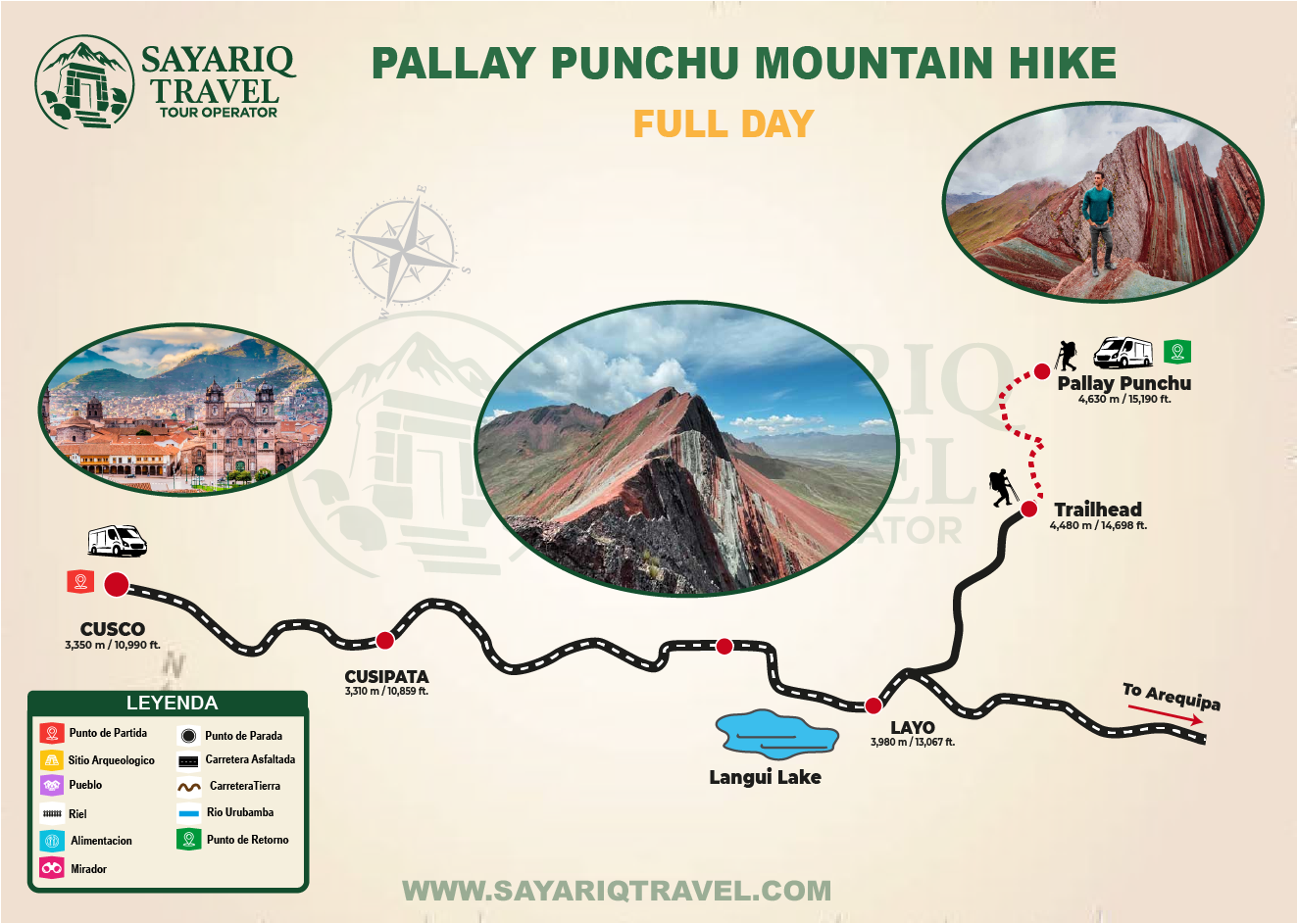
The Pallay Punchu Mountain Tour begins early in the morning with pickup from your accommodation in Cusco. The route follows Cusco – Sicuani – Layo, passing through provinces such as Quispicanchi and Canchis, as well as traditional villages, farmlands, and high-Andean lagoons.
From the community of Layo (3,900 m.a.s.l.), the hike begins toward the majestic mountain, whose summit reaches 4,791 m.a.s.l. The trek lasts between 45 minutes and 1 hour, depending on acclimatization, along quiet rural trails with uphill sections and dirt or rocky terrain — ideal for travelers seeking authentic, off-the-beaten-path adventures. Once at the summit, you can admire the unique beauty of Pallay Punchu, also known as the “Andean Poncho,” with its colors and shapes that evoke ancestral fabrics. You’ll enjoy panoramic views of mountains, lagoons, and valleys before returning to enjoy a local lunch and then heading back to Cusco.
Culturally, Pallay Punchu means “embroidered poncho” in Quechua, referring to the colors and shapes of its peaks, which resemble a woven Andean poncho. Recently promoted by local residents, this place is also a spiritual destination where pago a la tierra (earth offerings) rituals are performed, and you can see apachetas (stone cairns). In addition, the Pallay Punchu landscape and the nearby Langui Lagoon were part of important Inca routes and are surrounded by high-Andean wildlife such as llamas and alpacas.
Quechua and the connection with ponchos:
The name “Pallay Punchu” comes from the Quechua words pallay (embroidered) and punchu (poncho), which translates to “embroidered poncho.” This reflects the shape and vibrant colors of the mountain, evoking the richness of Andean textiles.
A place of rituals and spirituality:
The mountain has become a sacred site for the local community, where ancestral “earth payment” ceremonies (pago a la tierra, offerings to Pachamama or Mother Earth) are still performed.
Presence of apachetas:
Apachetas — piles of stones stacked as offerings to the mountains — are clear signs of these traditional Andean spiritual practices that continue today.
Inca routes
The proximity to the Langui Layo Lagoon and surrounding landscapes suggests that the area was part of ancient Inca routes.
Cultural heritage of the Canas
The region carries a cultural legacy that dates back to the settlement of Kaika Pucará, part of the ancient Canas nation
Accepted Payment Methods





 Cusco Tours
 All-Day Hiking Tours
 Adventure Tours
 Cusco Tours