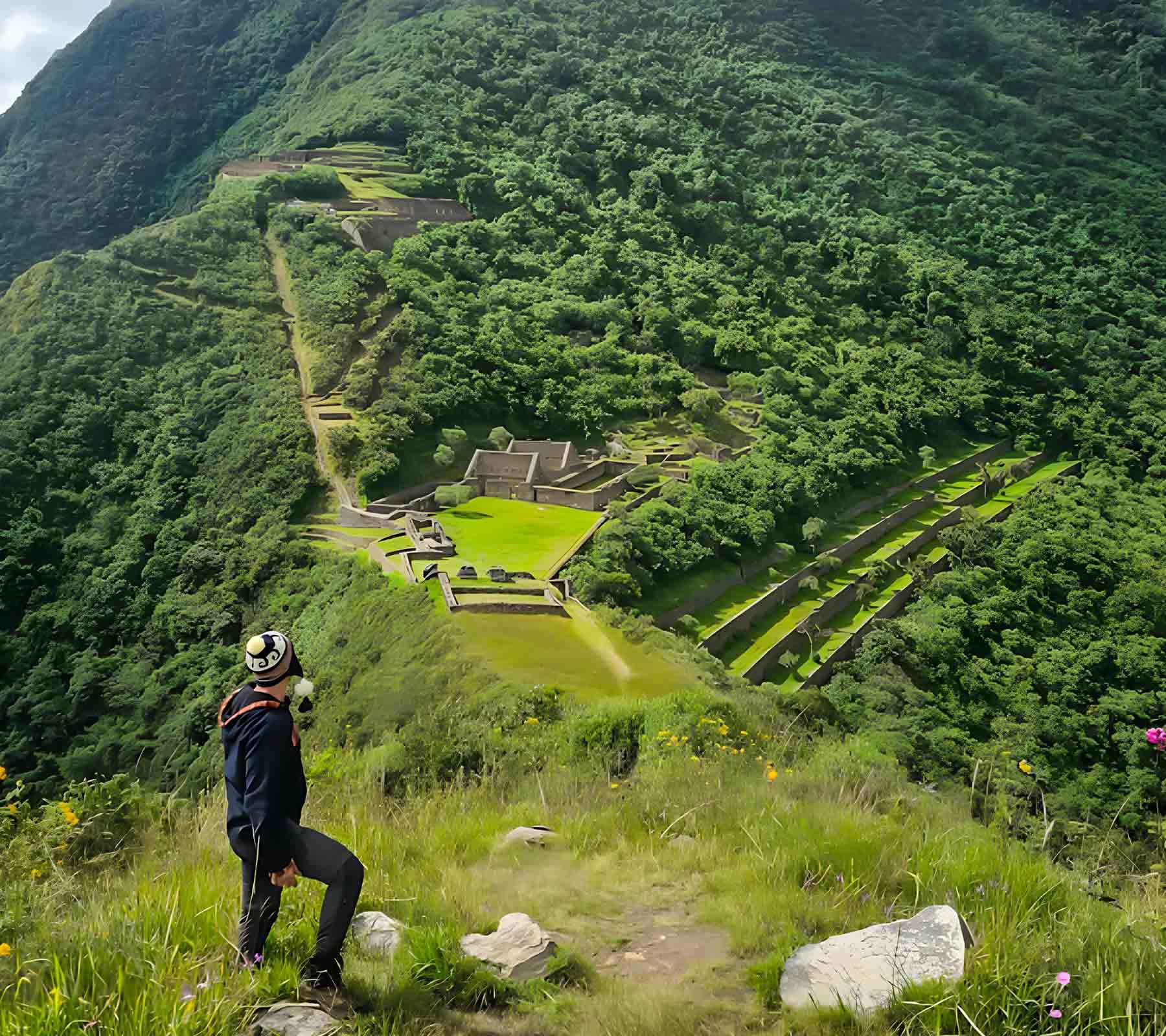
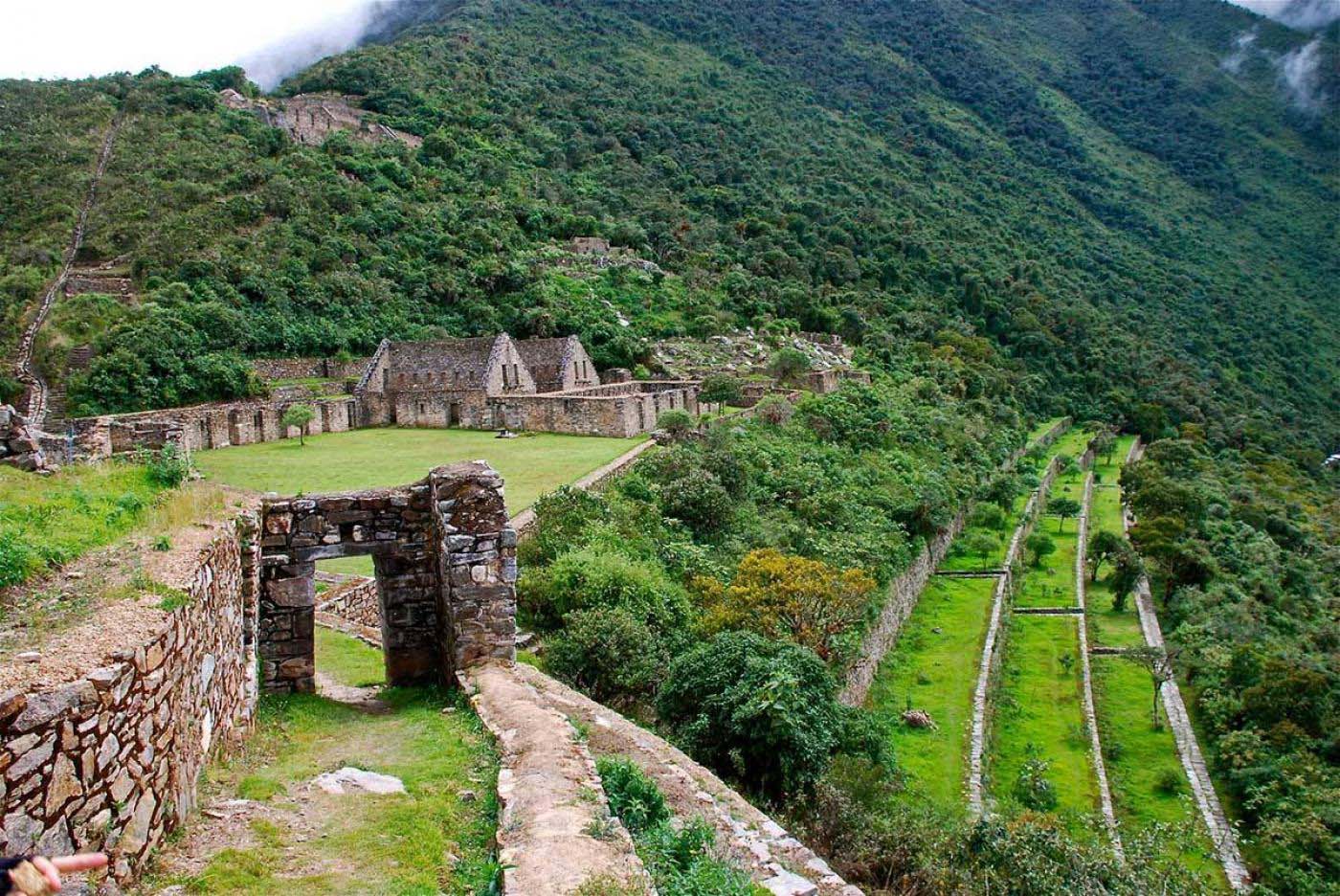
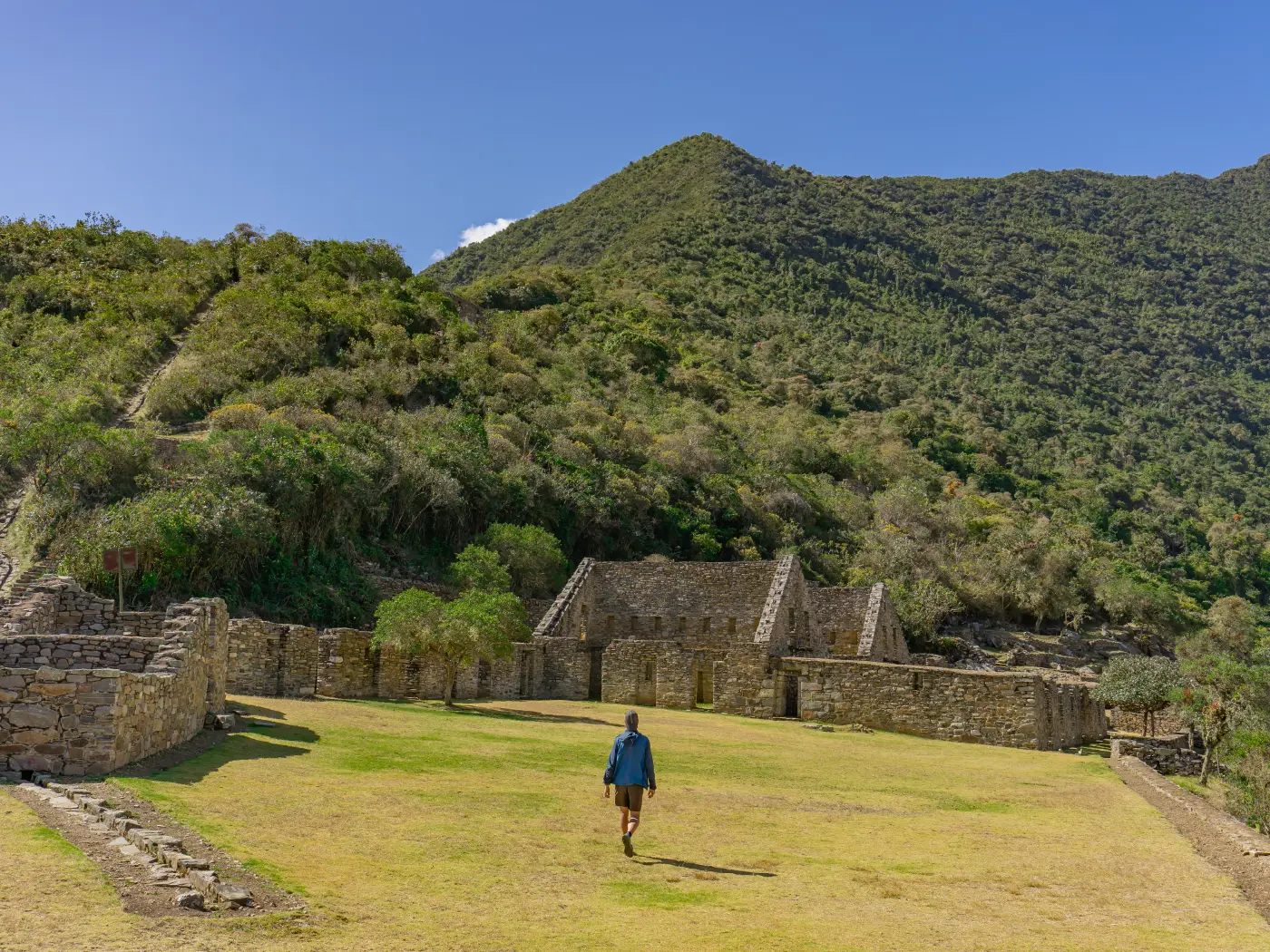
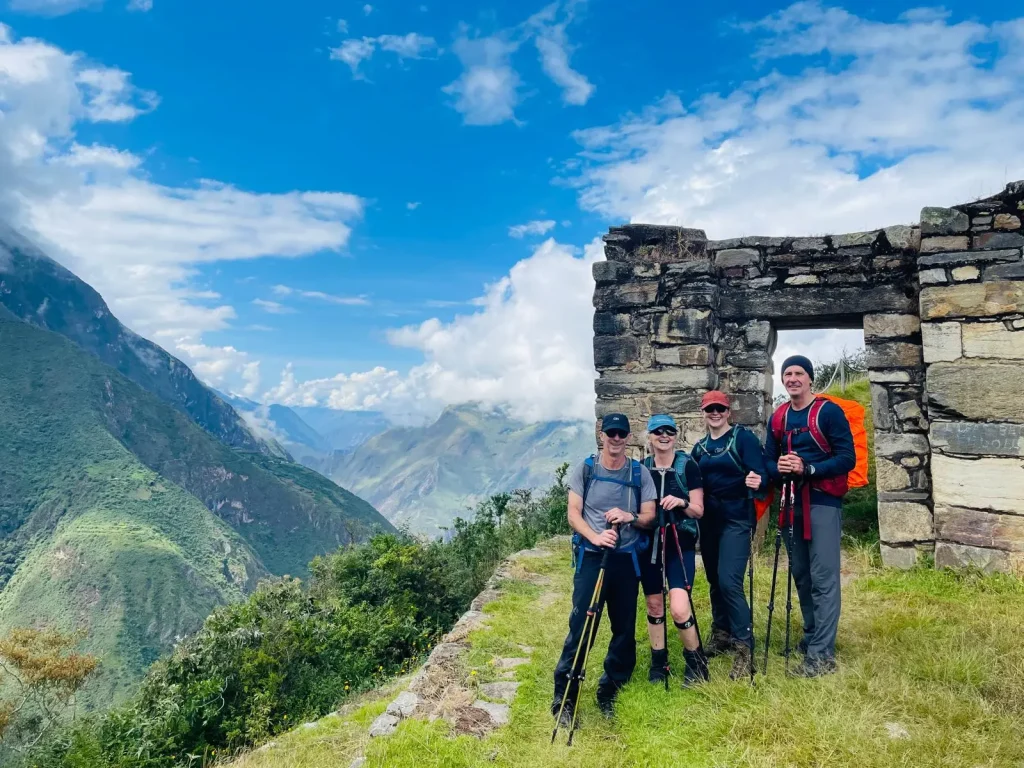
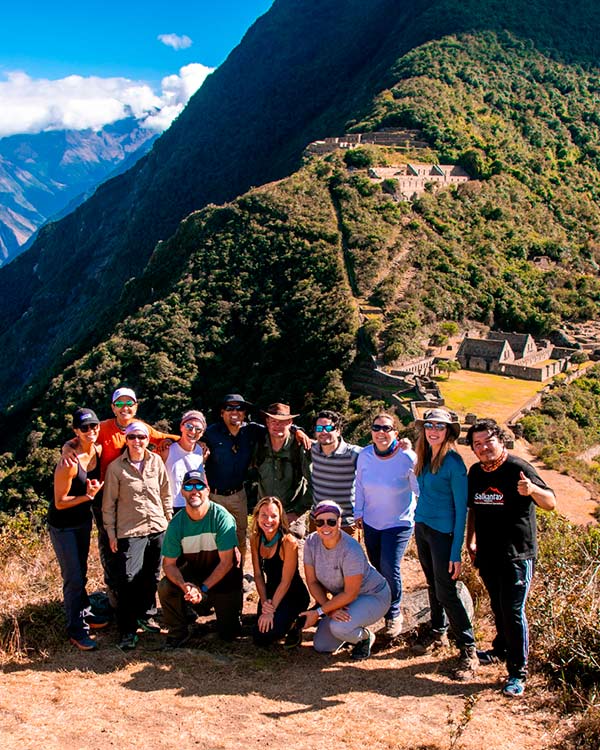





The trek to Choquequirao offers a unique experience far from conventional routes. The Lost City of the Incas is located at an altitude of 3,033 meters above sea level.
As with all the best experiences, they often follow a challenging climb, and this trek is no exception. The four-day trek to Choquequirao starts in the village of Cachora. You will descend to 1,500 meters in the Apurímac Valley. The next day, you will ascend to 1,800 meters to reach the archaeological site. Some choose to continue the trek to Machu Picchu. However, for most, the 4-day trek offers one of the best alternatives to the Inca Trail to Machu Picchu.
Why choose Sayariq Travel ?
We offer exclusive local guides with extensive knowledge of the route, culture, and history. At Sayariq Travel, we strive to offer the best experience. We use excellent and comfortable camping gear, and our campsites are located in safe areas.
We depart early in the morning towards the northeast of Cusco, heading to the village of Cachora (2,850 m a.s.l.). Cachora is surrounded by mountains and the snow-capped Padreyoc. From here, we continue to Capuliyoc, where we will meet the horsemen who will help carry the camping equipment.
As we begin our hike, we will notice the imposing presence of Padreyoc at the Capuliyoc pass (2,800 m a.s.l.). After Capuliyoc, we will witness the spectacular view of the Apurímac canyon and begin the route towards the Choquequirao archaeological site, which will lead us to a short descent towards the Chiquisca campsite (1,930 m a.s.l.).
Walking time: 7 hours
Weather: Warm with mosquitoes
After breakfast, we will begin descending for 30 minutes to Playa Rosalina (1,500 m.a.s.l.). From here, we will begin ascending the canyon as quickly as possible, in warm weather, until we reach the village of Marampata (2,850 m.a.s.l.).
From this point, we will have a beautiful view of the Choquequirao archaeological site. The sunset at Choquequirao is an impressive experience, especially when combined with the majestic presence of the condor, soaring over the ancient mountains of the Vilcabamba mountain range and the Choquequirao archaeological complex.
A 20-minute walk from the Choquequirao archaeological center, we will set up our camp for the night.
Walking time: 7 hours
Weather: warm and cold
On this day, a professional guide will tell us about the Choquequirao archaeological site, its history, ruins, and recent excavations. Today, Choquequirao hides many ancient secrets.
Currently, only 30% of the ruins have been restored. A restoration project has been created, which will take several years before Choquequirao can be fully exposed to the world. In the future, this site will become a tourist attraction as big as Machu Picchu.
After our visit to Choquequirao, we will return to Marampata and then continue descending into the depths of the Apurímac Canyon. From there, we will ascend again to the forest where our camp is located, in Chiquisca (1,930 m.a.s.l.).
Walking time: 6 hours
Weather: warm with mosquitoes
In the morning, we will ascend to Capuliyoc, where our transport will be waiting in the Apurímac Canyon. This stop will also be ideal for watching the Condor in its natural habitat.
After a brief time at the Capuliyoc pass, we will begin our return to Cusco, thus concluding one of the most impressive journeys to Choquequirao.
The trek to Choquequirao offers a unique experience, far from conventional routes. The lost city of the Incas is located at an altitude of 3,033 meters above sea level.
Choquequirao shares many similarities with Machu Picchu. Both were built around the same time by the Ninth Sapa of the Inca Empire, Pachacuti Inca Yupanqui. The name means “cradle of gold” in Quechua, the native language.
Choquequirao is considered the last bastion of resistance and the final refuge of the Incas, especially those who fled Cusco when it was under siege in 1535. Led by Manco Inca Yupanqui, they sought refuge here. Presumably, it served as a control point for accessing the Vilcabamba area and as a cultural and religious center.
This area features a variety of microclimates. The landscape includes snow-capped peaks exceeding 6,000 meters above sea level, high Andean plateaus, and impressive tropical jungle. This region was dominated by Manco Inca after the Spanish conquest. The area includes various nuclei, sacred settlements, and buildings.
The dense vegetation covers more than half of the archaeological complex. Due to its remote __cpLocation, it receives an average of 20-25 visitors per day, compared to Machu Picchu, which receives more than 5,000 visitors daily. To boost tourism, the Peruvian government plans to install a cable car, which could lead to a rapid increase in the number of visitors, estimating around 1,500 visitors per day.

Accepted Payment Methods





 Salkantay Treks
 Inca Trail
 Inca Trail
 Alternative Treks